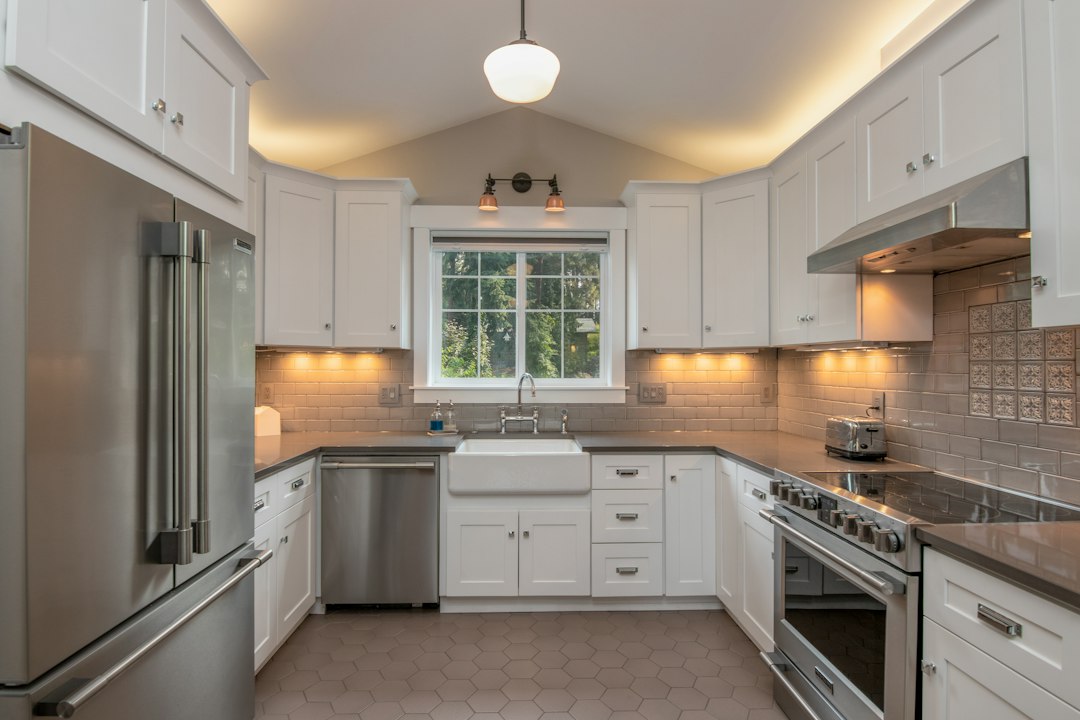

Refinishing is usually most suitable when the boxes are sound, the layout works, and the surfaces can accept a new finish. Solid wood and some wood veneers can often be cleaned, lightly sanded, repaired, primed, and coated. Veneer is a thin wood layer bonded over a core, so aggressive sanding can expose the material underneath. Laminate and thermofoil require a different assessment because their slick surfaces may resist ordinary coatings or have edges that are already lifting. If a door is swollen from moisture or a hinge screw no longer holds, refinishing alone will not correct the underlying problem.
The preparation stage determines much of the result. Degreasing removes cooking residue that can prevent primer from bonding, while sanding or deglossing creates a surface the new coating can grip. Small chips may be filled, and loose edges need attention before painting begins. Primer is the bonding layer between the cabinet surface and finish coat; it can also help block stains from bleeding through. A careful process includes protecting floors, counters, appliances, and nearby walls. For a homeowner comparing options, this preparation is a useful question to ask rather than focusing only on the final color.
A typical example is a 1990s kitchen with sturdy oak boxes, dated orange-toned doors, and hinges that still function. Refinishing may offer a sensible visual update, especially if the owner wants to keep the existing layout and avoid the disruption of new cabinetry. Another example is a kitchen with water damage below the sink, misaligned doors, and peeling surface material. That project may need repairs or replacement in selected areas before any refinishing makes sense. These cases show why a quote should distinguish surface work from carpentry, hardware changes, and replacement parts.
Color is only one decision. A darker or lighter finish can change the room’s appearance, but it will not hide dents, poor door alignment, or uneven gaps. Finish refers to the protective top layer and the sheen, such as a lower-gloss surface that shows less reflection than a high-gloss one. The chosen coating should suit how the kitchen is used and how much cleaning it receives. Refinishing can modernize existing doors, while new pulls, hinges, or drawer hardware may improve daily use. For a closer look at the service category, see cabinet refinishing hamilton before comparing estimates.
Refacing deserves consideration when the cabinet boxes remain useful but the doors and drawer fronts are too damaged, dated, or difficult to refinish. It changes more visible components than refinishing, yet it generally preserves the existing storage footprint. Full replacement becomes more reasonable when boxes are warped, mold-affected, poorly built, or no longer fit the household’s needs. Refacing and refinishing can also be combined with hardware upgrades, but each added element affects the schedule and price. Ask whether the estimate covers removal, surface preparation, new parts, painting, reinstalling doors, and cleanup.
Before work begins, request a written scope that identifies which surfaces will be refinished and which will remain unchanged. Ask how doors will be labeled and stored, how long the kitchen may be partly unavailable, and how touch-ups will be handled. A final walkthrough should check door alignment, drawer operation, coverage at edges, and the fit of new hardware. If you are still comparing approaches, a kitchen cabinet consultation can help clarify whether refinishing, refacing, or selective replacement fits the condition of the room. The sound choice is the one that matches the cabinet’s actual condition, not just its color.