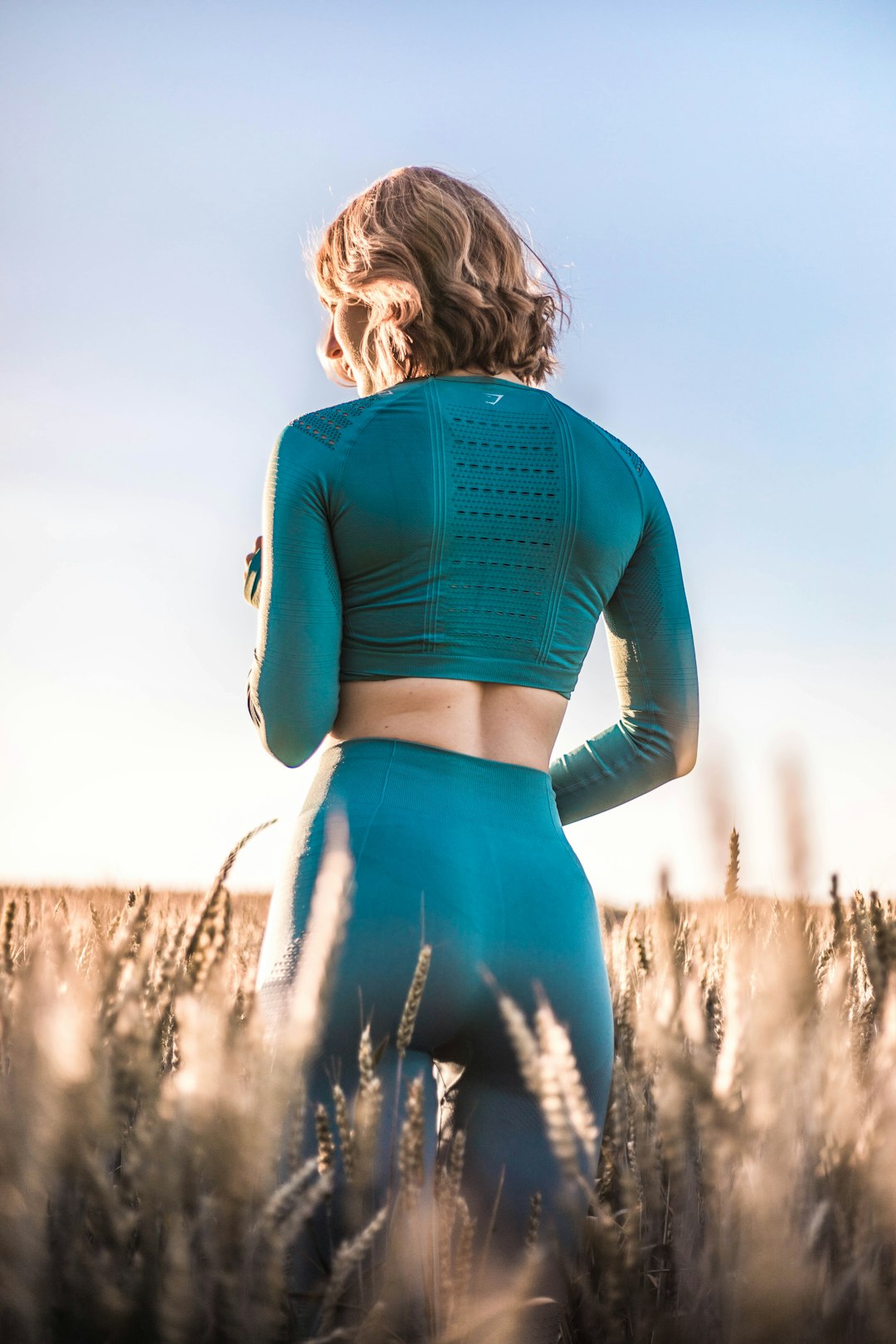

Begin with a short use brief before selecting colors or artwork. Record the sport, typical weather, expected range of motion, and washing routine. A runner may need smooth seams and quick-drying material, while a lifter may prioritize squat coverage, shoulder mobility, and resistance to equipment rubbing. Moisture-wicking fabric spreads perspiration over a larger surface so it can evaporate more readily, but it does not guarantee a dry feeling in humid conditions. For a club ordering unique activewear, this brief keeps an attractive concept from becoming impractical team clothing.
Fit requires a physical check rather than a guess based on a familiar size label. Compression tops and relaxed tees can use very different measurements, even when both are marked medium. Negative ease describes a garment cut slightly smaller than the body so it stretches snugly. Too much negative ease can create pressure and pull artwork out of shape. Compare the supplier’s chart with chest, waist, hip, inseam, and torso measurements. Keep those figures with the order worksheet, then test a sample through overhead reaches, lunges, seated movement, and repeated bending before approving the full run.
Imagine a volleyball player testing a sample during practice. She reaches overhead, dives, and jumps, then notices the hem exposing her midsection and the armhole pulling across her shoulder. A sprinter might report the opposite problem, such as a loose armhole flapping during acceleration. Those are not minor preferences; they reveal where the pattern does not match the task. Ask several body types to try the sample, and record pinching, riding, exposed skin, or shifting hems. A fitting-room mirror misses problems that become obvious after five minutes of real movement.
Fabric weight deserves attention beyond a soft showroom feel. GSM, or grams per square meter, describes fabric weight and helps compare samples. A lightweight knit may feel cool but still need opacity testing, especially in leggings or areas under strong stretch. A heavier knit can provide coverage and structure yet feel warmer during hard intervals. Test stretch recovery by pulling a panel, releasing it, and observing whether it returns to shape. A pair of leggings that looks polished at pickup may develop baggy knees after repeated lunges if recovery is poor.
Construction determines whether custom clothing stays comfortable after repeated use. Flatlock seams create a low, smooth ridge that can reduce rubbing along a runner’s arm swing or a cyclist’s bent torso. Reinforced stitching helps at crotches, pocket openings, and shoulder joins, where force concentrates. Load every pocket with the items a wearer normally carries and check for sagging. Inspect drawcord ends and elastic width too. A wash-and-wear sample is especially useful because laundering can reveal shrinkage, fading, seam movement, or a finish that felt fine only while new. For teams comparing custom team training apparel, these details matter as much as the graphic.
Artwork needs its own movement and care review. Sublimation places dye into compatible fabric, leaving a smooth surface and reducing the cracking associated with a raised ink layer. It suits all-over graphics, although screen colors may differ from the finished garment and tiny details can lose definition. Screen printing and heat transfers bring different surface feels and durability demands. Keep names, numbers, and sponsor marks away from seam crossings, high-stretch zones, and hook-and-loop closures. Before finalizing quantities, have a coach wash the sample, a runner complete intervals, and a dancer perform deep bends. Record heat buildup, chafing, fading, shifting hems, and care requirements, then use those observations to approve the order.